
Pascal’s Law: The Science Behind Hydraulic Superpowers!
by Donna Pollander, ACA
At IFPS, we talk a lot about fluid power fundamentals—and Pascal’s Law is one of the big ones. The good news? It’s much simpler than it sounds.
So, what is it?
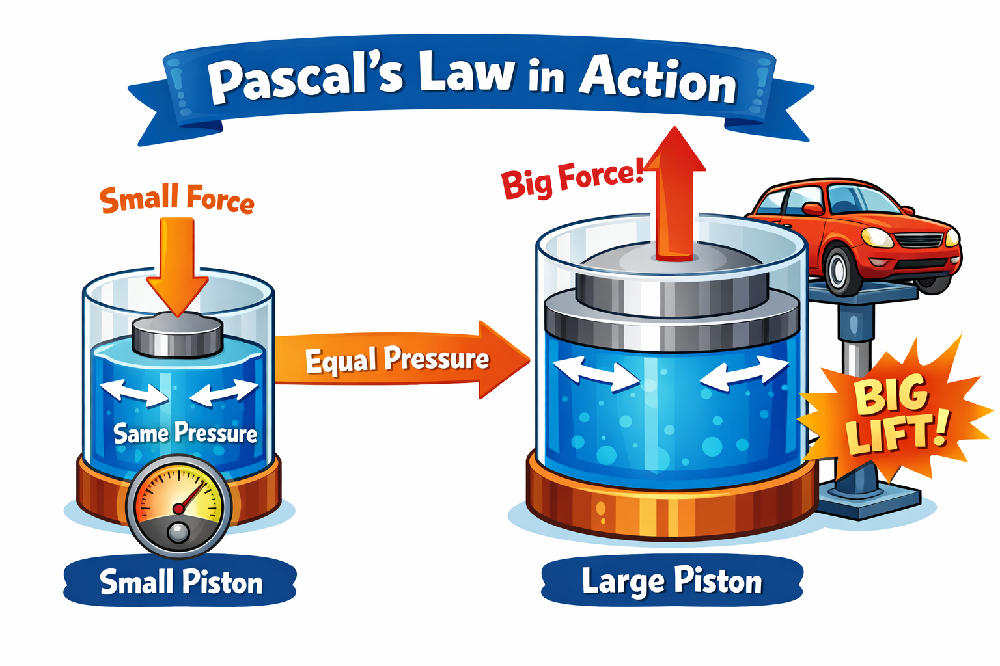
Pascal’s Law states that when pressure is applied to a confined fluid, it is transmitted equally in all directions.
In plain terms: push on a fluid in one spot, and that pressure shows up everywhere.
Why does that matter?
This principle is what makes hydraulic systems so powerful. It allows a small input force to be transformed into a much larger output force—think vehicle lifts, heavy equipment, and braking systems.
The “Aha!” Moment
Here’s where it clicks:
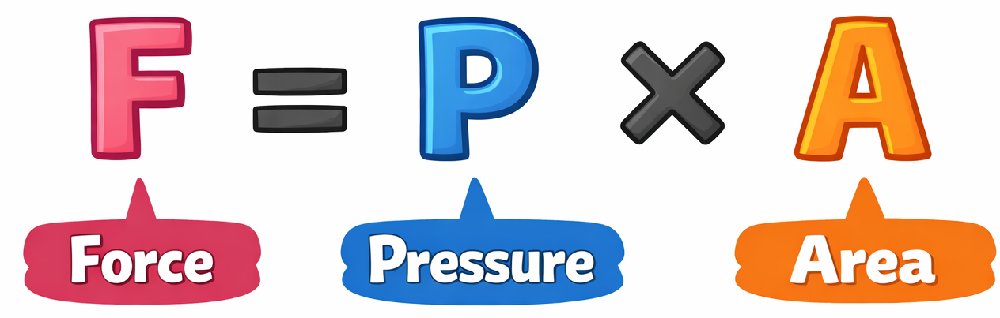
- Pressure (P) stays the same
- Increase the area (A)
- And you produce a larger force (F)
That’s how a relatively small input can lift something as heavy as a car. Not magic—just smart fluid power.
Why IFPS Teaches It First
Pascal’s Law is a foundational concept in fluid power. Once you understand it, many other hydraulic principles start to fall into place, making systems easier to understand, troubleshoot, and work with safely.
No headache required—just a simple concept with powerful real-world impact.